Construction Draw Schedule Template: Get Paid at Every Stage in 2026
A construction draw schedule template maps out how the money arrives on a job: the deposit that holds your calendar, progress draws released as stages of work finish, and the final payment at completion. Each draw gets a trigger the homeowner can see with their own eyes, a share of the contract, and a dollar amount, so "when is the next check" always has an answer both sides agreed to before the job started.
Without one, the default is the worst financing arrangement in the trades: you buy the materials, you pay the crew every Friday, and the customer pays you someday. A clear draw schedule keeps the job cash-positive as it runs, and it protects the homeowner too, because every check they write is tied to work that is visibly done. Jobs go bad over money surprises, and the schedule removes them.
Free construction draw schedule templates to download
Three working versions, pre-filled with realistic draws from residential jobs so you can see how a fair schedule reads before you build your own. Every download is a plain .xlsx file that opens in Excel, Google Sheets, or any spreadsheet app. No email address required.
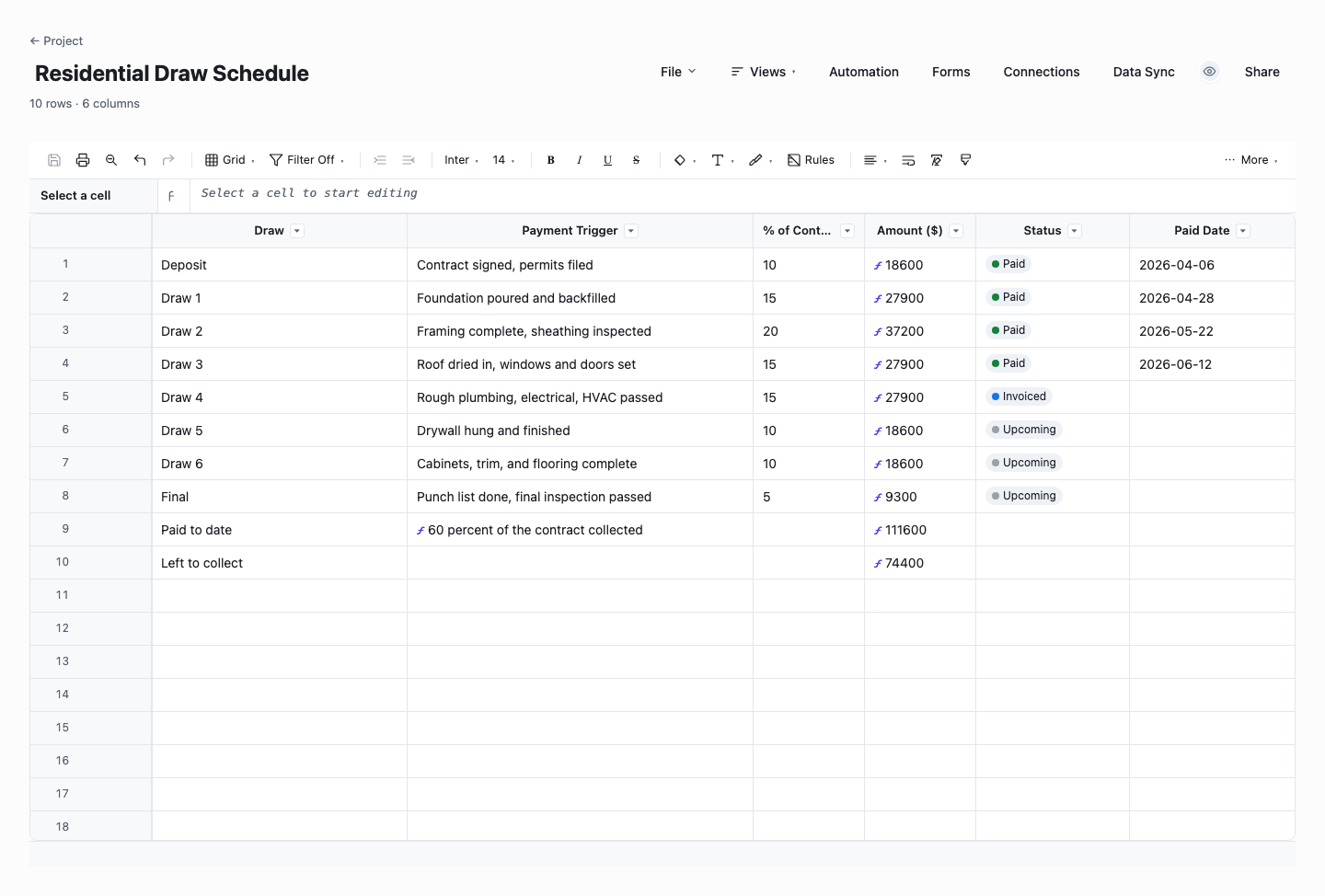
Residential Draw Schedule
The residential draw schedule is the everyday version for a contract between you and a homeowner: each draw with its payment trigger, its percent of the contract, a live amount computed from the contract value, its status, and the date it was paid, with paid-to-date and left-to-collect totals at the bottom. Put it on any job big enough to span more than one invoice. Write the draws into the contract and the money conversation is over before the job starts.
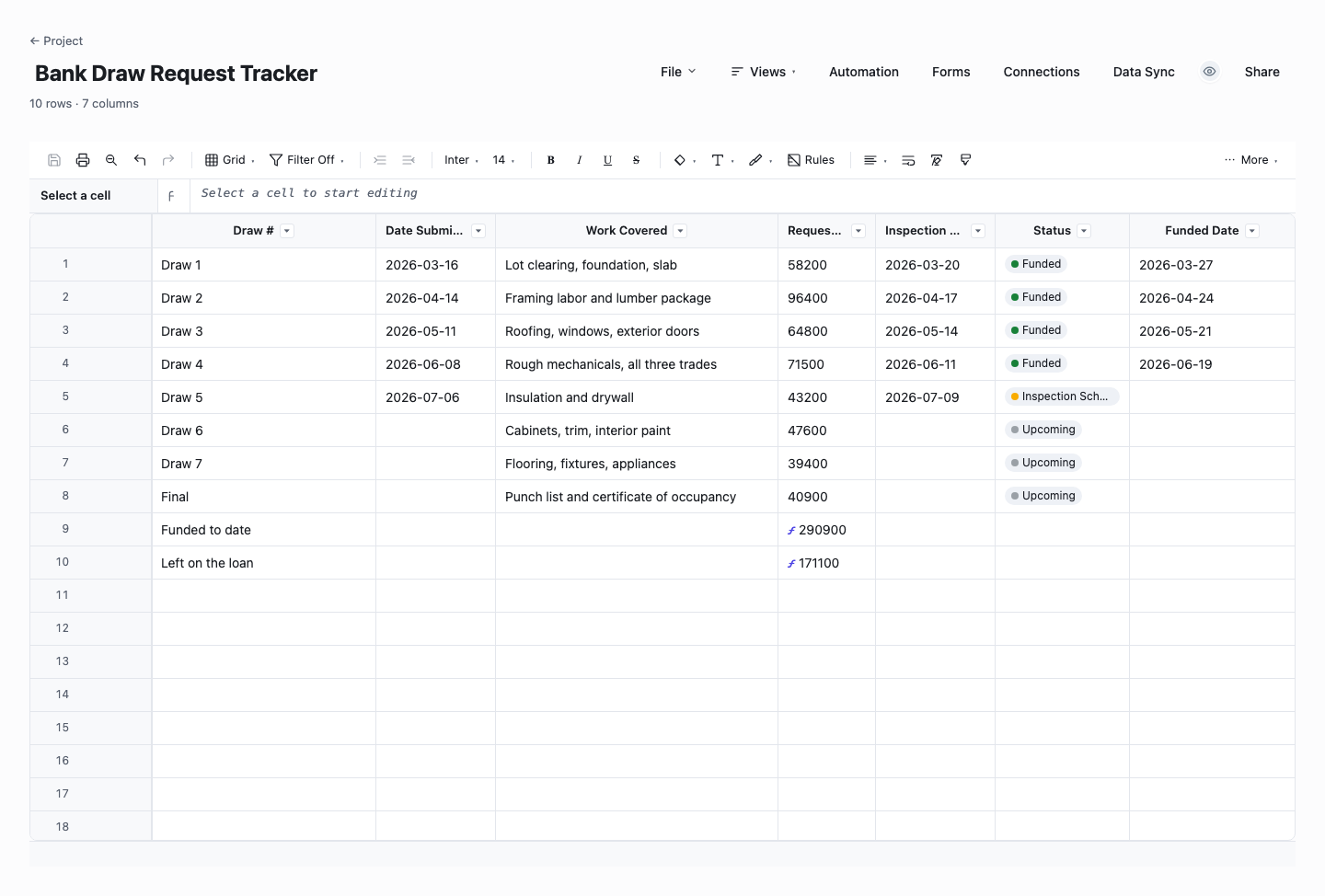
Bank Draw Request Tracker
The bank draw request tracker is for jobs funded by a construction loan, where every draw runs through a lender: draw number, date submitted, the work it covers, the amount requested, the inspection date, the status, and the date it funded. Lender draws move at the bank's pace, not yours, so the tracker's job is making the pipeline visible: what is submitted, what is waiting on an inspection, and what is funded, with totals for funded and remaining loan.
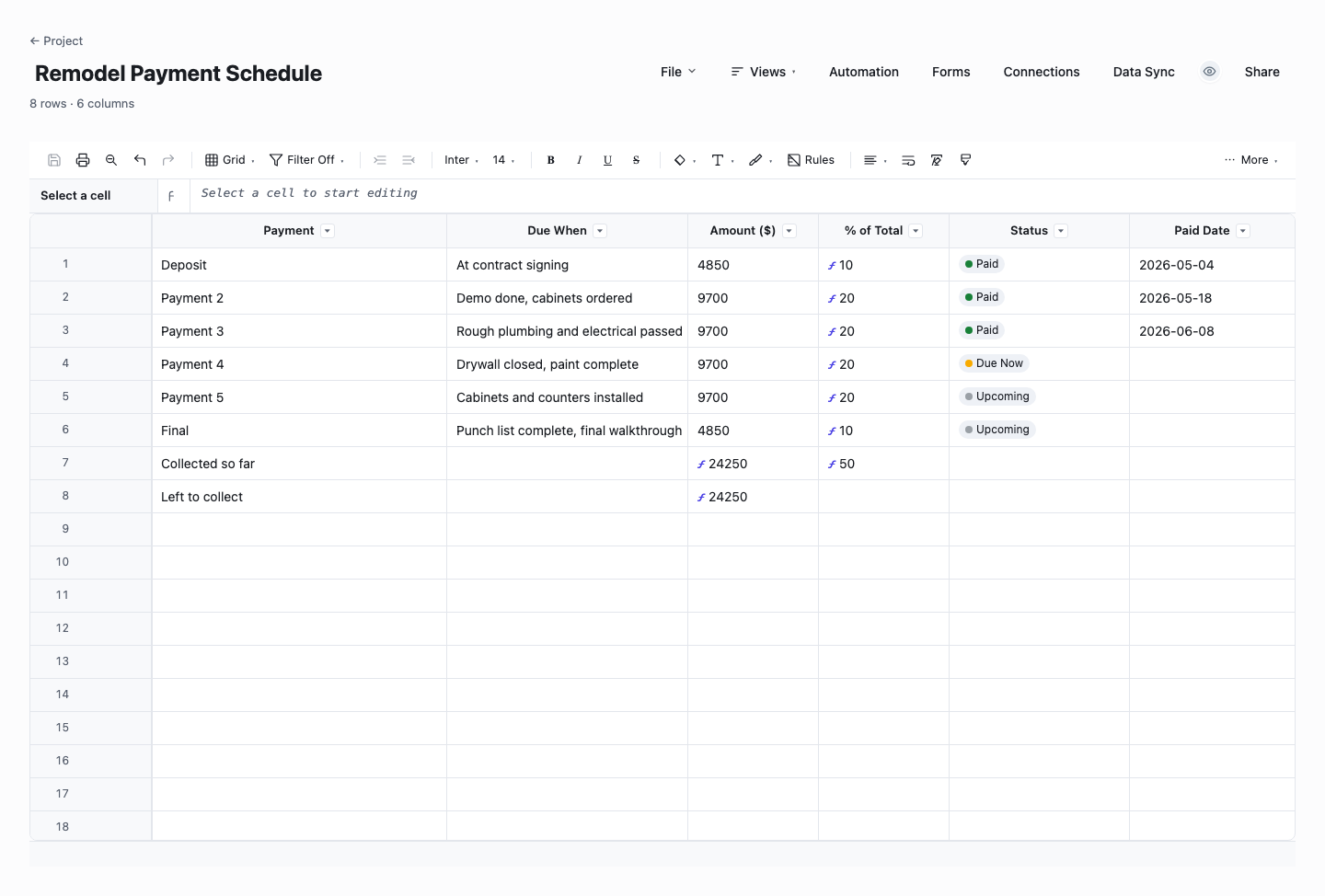
Remodel Payment Schedule
The remodel payment schedule is the homeowner-friendly version for kitchens, baths, and mid-size remodels: fewer, plainer payments, each tied to a milestone the customer can stand in the room and see, like cabinets set or tile done. Collected and left-to-collect totals update as payments land. Use it when a formal draw structure would feel heavy but you still refuse to finance the whole job to the final walkthrough.
How to build a draw schedule that keeps the job cash-positive
Tie every draw to work, never to a date
A draw triggered by "framing complete and inspected" pays when the work is real. A draw triggered by "March 15" pays whether or not the job earned it, and invites an argument if the schedule has moved. Date-based schedules feel cleaner on paper and cause most of the fights in practice, because weather and inspections move dates and nobody renegotiates calmly mid-job. Pick triggers a homeowner can verify by standing in the house and looking.
Size the deposit to commitments, and check your state
The deposit's honest job is covering what saying yes costs you: special-order materials, permits, and the calendar slot you are now holding against other work. Size it to those real commitments and it is easy to defend. Be aware that some states cap deposits on home improvement contracts, and the caps differ. Check your own state's rules before you write the number into a contract, because an over-cap deposit can put you on the wrong side of a consumer statute.
Keep draws small enough that no one is deep underwater
Four to six draws suits most residential jobs. Fewer, and you are financing long stretches of the work. Aim for a draw structure where you are never more than a stage of labor and materials out of pocket is the goal. More than about eight on a normal remodel and the homeowner feels like they are writing checks every few days, which erodes the trust the schedule was meant to build. Match draw size to the real cost of each stage, not to even percentages.
Never let the final payment hold your profit hostage
The classic mistake is back-loading: a thin deposit, modest draws, and a fat final payment, which means your entire margin sits in the last check, behind a punch list, at the exact moment your leverage is lowest. Keep the final payment real money, homeowners rightly want leverage for completion, but small enough that the job has already paid its costs before the walkthrough. A final draw around the size of your punch list risk, not your profit, is the discipline.
Invoice the draw the day the trigger completes
A draw schedule only protects you if you actually call the draws. The day the inspection passes or the cabinets are set, the invoice goes out, while the finished work is fresh and visible. Waiting a polite week turns into two, and suddenly you are two stages of labor ahead of the money again, which is the exact condition the schedule exists to prevent. Set a reminder on each pending draw so none of them ages quietly.
Fold approved change orders into the schedule
Extras change the contract value, which changes what the draws are worth. Decide the rule up front and write it down: small approved changes bill with the next draw, big ones get their own payment line with their own trigger. What kills you is the alternative, a pile of approved-but-unscheduled extras drifting toward the final payment, growing the exact hostage check the last step warned about. The change order log and the draw schedule should agree on the number at all times.
Watch: the draw schedule (2 minutes)
What triggers the next draw: stages that work
Good triggers are binary and visible. On a typical residential build or major remodel, the stages most schedules hang draws on are: contract signing (the deposit), foundation or demo complete, framing complete, rough-ins passed inspection, drywall and finishes underway, and substantial completion for the final. A homeowner does not need to know code to see that the slab is poured or the drywall is hung, and passed inspections give you a third party saying the stage is real.
Ambiguous triggers cause the disputes: "halfway done" is an opinion, "rough plumbing, electrical, and HVAC passed inspection" is a fact. If a stage has no natural inspection, define it by what is physically in place, and walk it together the day you invoice. On lender-funded jobs the bank sends its own inspector before releasing each draw, which is one more reason work-based triggers beat dates: they are the same language the bank already speaks.
Frequently asked questions
What is a draw schedule in construction?
A draw schedule is the agreed plan for how a construction contract gets paid out over the life of the job: an initial deposit, a series of progress payments called draws, each released when a defined stage of work completes, and a final payment at completion. It appears in two settings: between a contractor and a customer as the payment terms of the contract, and between a builder and a lender on construction loans, where the bank releases loan funds draw by draw, usually after its own inspection of the work.
How many draws should a residential job have?
Most residential jobs land between four and six, sized so neither side is ever far underwater: deposit, two to four progress draws tied to visible stages, and a final. A six-week kitchen might run three or four payments, a custom home might run six or eight. The test is the gap, not the count: if losing the next check would leave you holding weeks of labor and materials, the draws are too far apart for the risk you are carrying.
What should trigger a construction draw?
Completed, verifiable work: a stage the homeowner can see, or better, an inspection a third party has passed. Framing complete, rough-ins passed, drywall hung, substantial completion. Avoid calendar dates, which pay regardless of progress, and avoid vague fractions like "fifty percent done", which are opinions. The best schedules read like a walkthrough script: when you can stand in the house and see this, that check is due.
How big should the deposit be on a construction job?
Big enough to cover what committing to the job costs you: special-order materials, permits, mobilization, and the calendar slot you are reserving. On larger jobs that often works out well under a quarter of the contract, though small fast jobs justifiably run higher. Two cautions: several states cap deposits on home improvement work, so check yours before writing the contract, and a deposit far beyond your real commitments is a red flag to careful homeowners and their lawyers alike.
How do bank construction draws work?
On a construction loan, the lender holds the budget and releases it in draws as the work progresses. The builder submits a draw request describing the completed work and the amount, the bank sends an inspector to verify progress, and funds release after approval, on the bank's timeline. Title updates and lien waivers from subs and suppliers are commonly required along the way. The practical advice: know the lender's draw process before you price the job, and track every request from submission to funded so nothing stalls silently.
What happens to the draw schedule when change orders add work?
Every approved change order moves the contract value, so the schedule has to answer where that money gets collected. The clean rule: small changes bill with the next scheduled draw, and large ones get their own payment line with their own trigger, agreed when the change is approved. What you never want is approved extras silently piling onto the final payment, because that turns your completion check into the biggest and most contested number on the job.
Run it live instead of in a file.
The downloads above are yours either way. In Wisegrid the same template becomes a working sheet with owner contacts, status dropdowns, reminders, and dashboards. 7-day free trial, no credit card required.